What to Do If Your Car Battery Dies on the Highway: A Step-by-Step Guide
Key Takeaways:
- It is absolutely necessary to know when to stop your car safely.
- Ensure that you know for sure that the source of the trouble with your car is the battery itself.
- Contact either the highway emergency services, your roadside assistance insurance, or your rental company.
- Jump-starting the battery should not take place unless you have the proper tools and equipment.
- Take precautions that will help prevent future battery issues by having the battery checked regularly.
- Replace batteries that are old before they fail you unexpectedly during travel.
Nothing is as terrifying as cruising down the highway and your warning lights starting to flash. Before you know it, your vehicle capsizes, and you are left wondering what you should do next.
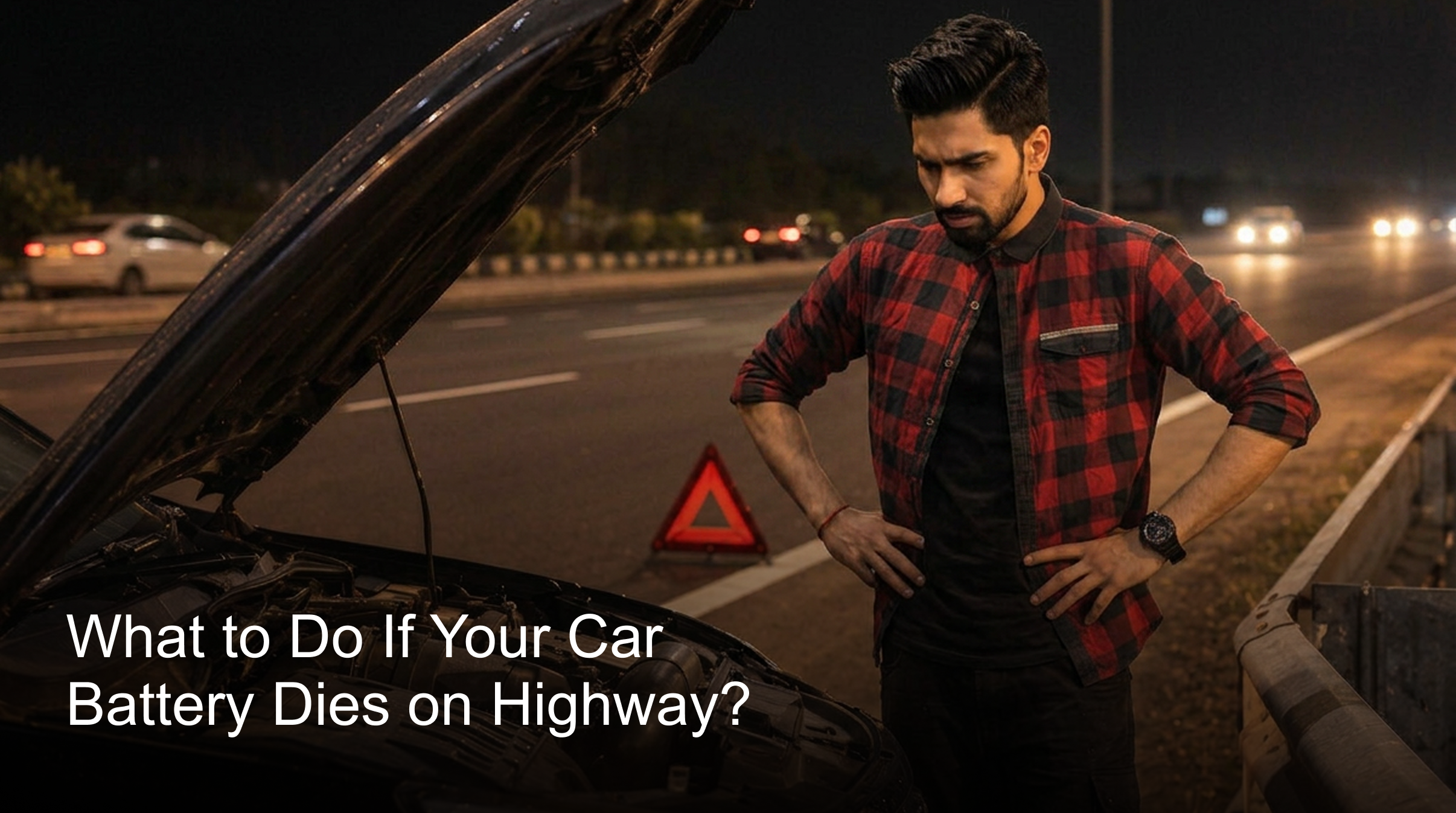
So, if you are somehow thinking, “What to do if your car battery dies?” Then, the first thing to do is to make sure that you are safe first. Then move the vehicle to a safe area if you are able to. Signal drivers behind you and ask for assistance. Only try to jump-start the car when you know it is safe to do so. Taking the right precautions and remaining calm can help avoid accidents and get you back on the road in no time.
How Do You Know It Is the Battery and Not Something Else?
A dead battery is typically when your car will not crank, will crank slowly, or will make clicking noises when you attempt to start the vehicle. You may see dimmed headlights, a battery warning light, weak electrical systems, or clicking on ignition. This happens when the battery is unable to provide enough power.
These kinds of battery problems are still one of the top reasons that motorists call for roadside assistance. According to a new 2026 automotive roadside assistance market analysis, battery jump-start services made up 19.3% of roadside assistance service demand in 2025. It points out that many times, discharged batteries leave drivers stranded.
Warning Signs Your Battery Is About to Die
When in doubt, most batteries give clear indications prior to total failure. So, always watch out for these symptoms:
- Slow engine crank – It can take longer to start the engine, particularly when first starting.
- Dimming headlights – Your headlights seem to be much dimmer, especially when the air conditioner and other electrical equipment are operating.
- Battery warning light – A battery symbol on your dashboard indicating an issue with the charging system.
- Clicking noises when starting the ignition – There are loud popping sounds made by the engine when starting it.
- Electrical accessories cut out – Infotainment, power windows, air conditioning, or the central locking system works erratically.
Dead Battery vs. Alternator Failure vs. Fuel Problem
Not all roadside breakdowns are due to flat batteries. By comparing the symptoms, you can help to understand the problem before roadside assistance is called.
| Symptoms | Dead Battery | Failing Alternator | Fuel Problem |
| At startup | Slow crank or no crank | Starts but struggles | Cranks normally but won’t start |
| While driving | Usually fine until battery is fully discharged | Battery warning light appears, lights dim, engine gradually stalls | Engine sputters or jerks before stopping |
| Dashboard clues | Weak or dead electrical systems | Battery warning light remains on while driving | Low fuel indicator or empty fuel gauge |
| Quick roadside test | Jump-start usually works | Jump-start works briefly before failing again | Refuel the vehicle if the tank is empty |
| Typical fix | Recharge or replace the battery | Repair or replace the alternator | Refill fuel or repair the fuel delivery system |
What to Do If Your Car Battery Dies on the Highway: 7 Steps
Being aware of what to do if the car battery dies can help in handling a stressful situation better. Please go through the guidelines below to ensure safety for yourself, your passengers, and other road users while you wait for help.
Step 1 – Get Off the Live Carriageway Immediately
Safely steer your vehicle towards the shoulder or designated emergency stopping area.
If the engine still has some power, steer the vehicle out of the active traffic lane by using remaining momentum to get out of the traffic lane. Direct the vehicle to the left shoulder, an emergency bay or a safe place that is not near a moving vehicle. Never park at blind corners, bridges or overpasses where oncoming motorists cannot see you. It is better to get off the carriageway as soon as possible to reduce the risk of a second collision.
Step 2 – Switch On Hazard Lights and Place the Warning Triangle
Make the car visible as soon as possible to traffic approaching.
Turn on your flashers to alert other motorists that you have a breakdown. Position your reflective warning triangle 45 to 50 meters behind you on the same side of the road as you are driving on if you have one. If available, use a reflective jacket for night or rain/fog conditions to increase your visibility when installing the warning device.
Step 3 – Exit Safely and Stand Away from Traffic
Get out of the vehicle and off the road to a safe spot.
If the vehicle stops safely, only exit when it is possible from the traffic conditions. Move away from the traffic and get out of the vehicle beyond the crash barrier or the traffic flow, and instruct all individuals to keep off the traffic flow. Do not stand right in front of or right behind the vehicle since the driver might not notice the other car until it is too late.
Step 4 – Confirm It Is the Battery
Look for clear signs that point towards a discharged or failed battery.
Look at the headlights and interior lights to check whether they are dim. Then attempt to start the engine and listen for multiple clicks or slow cranking. In cases where most electrical systems do not have power or have very little power, the battery is probably the culprit. If the battery warning light came on while the vehicle was being driven, however, then the alternator may need to be inspected.
Step 5 – Call for Help: 1033, Insurer RSA, or Rental Support
Don’t make any repairs yourself – call professional roadside assistance.
On a National Highway, dial the National Highway Helpline (1033) to arrange emergency services (ambulance, crane, etc) as appropriate. In addition to that, it is also advisable to call your vehicle manufacturer’s roadside assistance, your motor insurance company’s roadside assistance (RSA) or your rental company’s support team. Professional technicians can safely determine if the battery needs to be jump-started, replaced, or towed.
Step 6 – Attempt a Jump-Start If Safe and Possible
If you have proper equipment and a safe environment, then you should jump-start the battery.
You can jump-start a car to get enough power to start, but only try to jump-start a car if you have jumper cables, another vehicle with the same battery type, and enough room away from fast-moving traffic. Do not attempt to start a battery if it is swollen, has a crack or leak, or releases a burning odour. If you don’t know how to, and if you don’t want to risk injury or damage to your car, call roadside assistance for help.
Step 7 – Once Running, Do Not Switch Off – Drive to Help
Do not turn off the engine until your battery/charging system has been inspected.
Your car will start up after a jump-start, but don’t turn the engine off right away, as the battery may still need more power to start and run. Make your way directly to the nearest authorised service centre or trusted workshop to get your batteries checked. A professional diagnosis can help determine the cause and prevent another unexpected malfunction on the trip.
How to Jump-Start a Car Safely
When the car battery dies, it can be a stressful situation, but if you know what to do if the car battery dies, you will be able to jump-start your vehicle safely. Do not attempt a jump-start if the battery is damaged, leaking, or swollen. Here’s what you need to do.
- Step 1: Put both cars to the side in a safe place and turn the key to the OFF position on both vehicles. Use handbrakes and do not touch vehicles.
- Step 2: Connect the red (positive) cable to the positive (+) terminal of the dead battery.
- Step 3: Place the other end of the red cable on the positive (+) terminal of the car battery.
- Step 4: Connect the black (negative) cable to the negative (-) terminal of the battery.
- Step 5: Mount the other black cable to a non-black metal surface of the (disabled) engine block or chassis, NOT the negative battery terminal.
- Step 6: Turn on the vehicle and run it for 2-3 minutes.
- Step 7: Get the car started with the dead battery. After several tries, if it doesn’t start, call roadside assistance.
What You Need Before You Start
- Prior to attempting a jump-start, be sure you have:
- Two quality jumpers.
- A second vehicle that is charged to full capacity with a battery of the same voltage (usually 12v).
- Gloves and safety glasses (if available).
What If You Do Not Have Jumper Cables?
Don’t push-start modern automatic vehicles or try unusual ways to start. Under no circumstances should you attempt to do this on your own. You can call your roadside assistance service, your car manufacturer, your insurance company, or the National Highway Helpline (1033) for professional help. A lot of the roadside assistance services in India are able to send a technician who will have portable jump-starting gadgets or even facilitate a battery replacement if need be.
How Can You Prevent a Battery Breakdown on the Highway?
If you don’t know what to do if the car battery dies, try the following things to prevent a battery breakdown.
- Have the battery checked prior to long-distance travel, particularly if it is more than 3 years old.
- Regularly clean terminals to remove corrosion and ensure a secure connection.
- Check that the battery is firmly mounted to minimise vibration damage.
- Turn off the headlights, cabin lights and entertainment system from the vehicle.
- Avoid taking frequent short trips that don’t allow the battery to recharge fully.
- Check alternator and charging system when performing routine vehicle maintenance.
- Replace your battery as recommended by the manufacturer instead of waiting for it to fail.
- Always check to have jumper cables or a portable jump starter in the vehicle during travel long distances.
Renting for a Highway Trip? Revv Has Breakdown Support Built In
When you know help is always available, it’s a lot easier to plan a long road trip. The self-drive cars, offered by Revv, are serviced and maintained regularly to minimise the risk of an unexpected breakdown.
All rentals come with insurance as well, for the extra peace of mind while travelling. Furthermore, in the case of battery failure or any other mechanical issue, there is the presence of a 24/7 customer care team from Revv who can help. In this manner, you do not have to deal with the issue on your own. You do not have to fear emergencies, as you will be able to concentrate on getting to your destination.
Book your next self-drive car using the Revv app and travel the highways safely and confidently.
Conclusion: Stay Calm, Stay Safe, and Get Moving Again
Everyone knows how stressful it is to deal with a dead battery on the road. Knowing what to do if the car battery dies beforehand may really prevent a highway breakdown. However, it is necessary that you safely park your vehicle, make proper arrangements, and get it jump-started. Always remember, while making plans for your next road trip, to choose a good self-drive car rental company like Revv.
Frequently Asked Questions
Wherever possible, park your vehicle at a safe location and turn on the hazard lights immediately. Next, get out of the road and call roadside assistance.
If your question is what to do if the car battery dies, first determine the signs. Slow cranking or making noises is the most usual sign of a dead battery. However, the presence of a battery warning light and the engine stalling while driving mean that the alternator has failed.
In case of any breakdown on an Indian National Highway, contact the National Highway Helpline (1033). Moreover, you need to reach out to your insurance company’s roadside assistance service or your automobile manufacturer’s help service.
Assemble the jumper cables in sequence, and start the car with the dead battery. Take the cables off in the reverse order and go to the nearest service centre for a battery inspection.
Jumper cables or portable jump starters are essential in order to jump-start your vehicle. You will need to call a roadside assistance service. A technician will be able to safely jump-start or replace the battery on the spot.
Drive your car for 20-30 minutes to give time to the alternator to charge the battery. Your battery and charging system can be inspected by a professional at this point.
Ensure regular servicing of the battery, terminal cleaning, and battery replacement. An alternative approach to prepare for battery problems is to take jumper cables or a portable battery jump starter.